What It Really Means to Be Rich — Beyond (M0NEY & STATUS)
Why true wealth has more to do with freedom and time than money.


When you think about the idea of being rich, what’s the first thing that comes to mind?
Well, if you’re like most people, the answer is probably money. That’s what we think of when we think of a rich person — somebody who has a lot of money.
Or if you’re somebody who spends a lot of time watching online content creators, maybe something that also comes to mind is audience: somebody who has a lot of followers, a lot of subscribers, a lot of people commenting on their videos.
But I think this idea of richness can be a lot broader than we typically think. It’s not just money we can be rich in.
In fact, the other day I saw somebody tweeting about the idea of time billionaires. If you’re 20 years old, you have more than a billion seconds left to live on average, whereas somebody a little bit older, even if they have a big bank account, they’re not a time billionaire.
So I got to thinking the other day while I was out on a bike ride, like, what does richness mean to me?
And indeed, that definition comes out a lot broader than just money or followers. “For me, I want to be rich in not just time, as in like being a time billionaire, but also in having free time — time to explore, specifically time to build new skills, to pursue ideas that interest me.”
I want to be rich in relationships, and not just casual relationships, not just audience members who follow me online, but deep relationships — people with whom I can have deep conversations, people who I love and who love me back.
And I think if you really asked yourself this question, you would come up with the same answers or some very similar answers, or at the very least, money wouldn’t be the only thing on that list.
And yet in my own life, I continually find myself with priorities that align with the money side of richness, or with the audience size side of richness.
And I often find myself deprioritizing these other, more ethereal parts of richness, even though, when I really think about it, when I really think about what I want, these are the things I want more.
I wonder, why is that so?
Here’s the theory that I have right now, at least for me, but I think this might apply to other people as well.
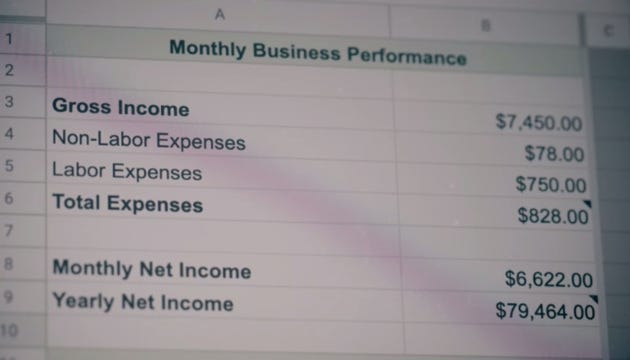
These sides of richness — the money, the audience, the business growth — they’re easily tallied. It’s very easy to keep track of and keep score of these things.
You can easily see how much money is in your bank account or how much money you make every year.
It’s very easy to say, “I make six figures.” I made five figures last year; I made six figures now. You can put a growth number on that, you can make spreadsheets and see different percentages, reds, and greens.
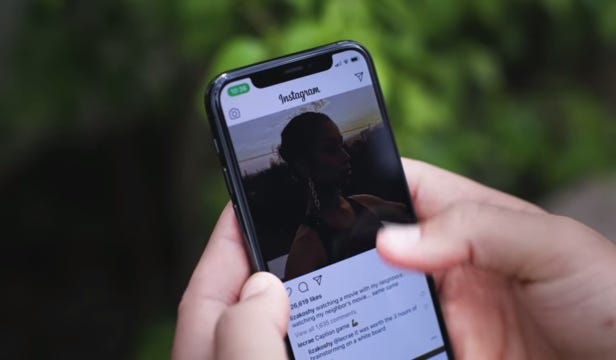
With audience growth, it’s the same. You can easily see how many followers you have, be it on YouTube, Facebook, Instagram, or any social network.
By contrast, these other areas of richness are a bit more ethereal. Having free time is a little harder to really keep track of.
It’s harder to really focus on what that means. Relationships — it’s hard to focus on what that means.
And I think as a result we tend to take these areas for granted and to deprioritize them, or at least we’re very incentivized to do so.
Not least of which, because of the society we live in, the economy we live in, and the companies that we interact with.
When it comes to social networks, these companies are highly incentivized to keep you on the platform and focused on growing your audience if you are a creator.
And with the economy, all businesses want to have more sales. They want to have more economic activity, so they’re very incentivized to keep you focused on how much money you can make, so you can therefore spend that money.
They are not incentivized to make you think about how much free time you have or how deeply you are invested in your close relationships.
So, as an individual, you have to find a way to prioritize these other areas of richness if you do care about them.
I’ve been thinking about that lately. How can I prioritize these areas when the money, the followers, and the business success are so easy to get addicted to, so easy to keep score of?
And this is a tough problem, and I’m probably not going to solve it for myself overnight, but I think there are a couple of things that I can do to start moving in the right direction.
#. INTENT
The first one has to do with intent. What actions can I take that will solidify my intent to prioritize these other areas of richness more effectively?
One of them is simply writing down and then periodically reminding myself of what I truly care about.
So I’ve written down my priorities, and I’ve put the money, and I’ve put the audience growth lower on the list than these other things.
I think we need to periodically look at what our priorities are because it’s very easy to get lost in the minutia of our day-to-day lives, and with all the different opportunities that come at us.
We need to remind ourselves again and again and again, I think, of these priorities so we can make more informed decisions instead of just chasing the shiny thing when it presents itself.
#. PROXIMITY
Beyond that, though, I think it’s very important to think about our proximity to the sources of information, the tools, and the relationships that cause us to focus on the things that, long-term, we don’t want to be constantly focused on.
In terms of focusing on the money, focusing on the audience, and business growth, I am constantly exposed to and am very close to a lot of those things. My social networks, my YouTube channel stats page, Slack, where I have a lot of my business conversations — they’re all right behind me on this computer, which is in my home.
It’s not at some far-flung office somewhere where I can commute and do my work and then come home at the end of the day and be physically separated from it. It’s all right here.
In many cases, it’s all on this distraction rectangle that’s in my pocket most of the time.
And that presents a problem.
I’ve been thinking a lot about bad habits lately, and one of the things that causes us to continue to engage in a bad habit is when we’re in very close proximity to it.
I think this is why cold turkey is the best way to break a bad habit rather than trying to self-regulate.
Because if you have a bad habit in the first place and you’ve called it a bad habit, then you’ve already stated to yourself that I have a problem self-regulating.
If you remove yourself from the source of temptation, that’s the strongest way to not engage in that lack of self-regulation.
So if I want to increase the time that I spend focused on these more important aspects of richness, then I have to figure out how to increase my distance or decrease my proximity to everything that incentivizes me to keep focusing on the money, to keep focusing on the audience.
That might mean turning off this computer at the end of the workday. That might mean signing up for social obligations, making plans with friends more often.
That might mean leaving my phone up in a room for most of the day so I don’t have quick access to it.
How can we decrease the amount of time we spend focused on these easily tallied aspects of richness and increase the amount of time we spend focused on the other things that we might care about a bit more?
I’ve been thinking a lot about this idea over the past couple of weeks, especially since I just moved into a new house.
I just started tearing up the floorboards so I can have people come in here and lay carpet.
I’ve been thinking about how I could hire people to come do everything here, but there’s a lot of it that I just want to learn how to do. I want to learn how to make this place my own.
Maybe the real way to make this place my own isn’t just by laying carpet or fixing the floors.
It’s by investing my time and attention into it — learning new skills, making mistakes, and slowly shaping it into something personal.
Strangely, this project reminds me of the bigger idea of richness. Being rich isn’t just about money or followers; it’s about having the time and freedom to build things that matter to you.
And sometimes, that simply means picking up the tools yourself and creating a life that truly feels like your own.
THANKS FOR READING 🙂