5 Costly Money Habits That Quietly Destroy Wealth
Most people make these mistakes without even realizing it.

The majority of people don’t always make the best money decisions.
My goal is to help you make fewer of those bad decisions, so basically, I’m gonna go over 5 things you need to stop doing.
Have you ever looked at your friends’ spending decisions and wondered, wow, what a dumb way to use your money? Are you kidding me? I judge my friends all the time.
Well, how many times do you think your friends are secretly judging you? Did Bunty really just spend 500 on a new PlayStation? He’s 20,000 in credit card debt.
Some bad financial decisions are more obvious than others.
That’s why, in this story, I’m going over 5 dumb ways that people use their money, some of them from personal experience.
That way, you do not waste your money doing these five things.
So make sure you read this story properly until the end because you don’t want to miss any of these five things.
1. Don’t become used to SPENDING
You get so used to the spending that you don’t know what it would be like to not spend your money.
Has this ever happened to you? You go to the mall to buy a pair of jeans, and you think it’s going to cost you a hundred dollars.
And you go and buy the jeans, and that’s when you find out the jeans are on sale for $50. So you’ve got to save $50.
Now you have this extra $50 in your hand, and you tell yourself, I’m going to take this extra $50, and I’m going to put it in my bank and save it, or I’m going to take this extra, and I’m going to invest it.
Lots of people say that, but not many people actually do that.
People in America don’t like the idea of taking extra cash that they thought they were going to spend and then saving the money or investing the money.
Instead, they like to take this extra cash that they thought they were going to spend, and they spend it.
What do you have on sale for $50?
Studies show that when gas prices fall from four dollars a gallon down to two dollars a gallon, or below two dollars a gallon, people could save 10, 20, 30, 40 dollars a week, depending on how much you drive.
But what actually ends up happening is people create this imaginary budget in their mind where they think, oh, I have to spend $50 a week on my gas.
So when gas prices come down, people actually end up spending more money on gas because they start using premium gas.
Because you have this imaginary budget that says you need to spend more money on gas, so gas prices come down, and you make up for this discount by pumping more expensive gas.
So that $10, $20, $30, $40, you could have saved every single week, which could have saved you a ton of money and interest on your credit card payments.
When you create this imaginary budget in your mind, where you tell yourself you need to spend $50 a week on gas, it’s very hard for people to only spend $25.
So you need to break out of the system, start saving that cash, and use it to build your wealth.
2. Don’t confuse your Assets & Liabilities
An asset is something that makes you rich, and a liability is something that keeps you broke.
So assets are things like investment stock investments, real estate investments, things that you buy for the purpose of making money.
And liabilities are things that keep taking money away from your pockets.
When I was in high school, I was making pretty good money for a high school kid.
I mean, I was working at Auntie Anne’s Pretzels, so I was making pretzels and working the cashier. That was like my regular hourly job.
I also worked at weddings on weekends, and I was kind of starting up my own event planning business, so I was making some decent money as a high school kid.
It wasn’t a whole lot of money, but for a high school kid, it was pretty good.
And when I made this money, I would invest my money into my car.
Anytime I had some extra cash, I parked this money in my car because I just wanted to have a sweet ride.
I drove a Toyota, and one of the first things I did was I put on custom rims on my car.
Then I put tinting on my car, and then I got the sound system put in my car.
But I didn’t pay the 99 to upgrade it, that way I could have Bluetooth in the sound system because I didn’t know what Bluetooth was at the time.
Then I put subwoofers in my car, and then the first time I had four thousand dollars in my bank account, I was gonna go out and put Lamborghini doors, those butterfly doors, on my car, the ones that go up. But my cousin was like, ” You’re an idiot, don’t do that.
I used to watch a lot of Pimp My Ride when I was a kid, and I was all about customizing cars. And thankfully, I was not driving around in a Toyota with butterfly doors.
I spent probably thousands of dollars on my car, thinking I was investing this money, but I was actually investing this money into a liability.
So it’s not really investing, but all that money went nowhere because the car became worthless.
But if I had actually invested that money into an asset, something that makes me money, well then I would have turned my couple thousand dollars that I invested into my car into something a whole lot more.
Because every dollar you spend on something that is a liability could be worth two dollars, if not a whole lot more, in the future.
So if I spent two thousand dollars upgrading my car, I spent $2000, but I also lost out on the opportunity to make $4000.
The reason I say that every one dollar you spend on a liability today is two dollars you could have in the future is that if you invest one dollar today and you get an average rate of return, that one dollar will be worth two dollars in a decade.
3. You save all your money.
This one goes against pretty much every Indian person’s teachings because every Indian person teaches the kid that you need to make a dollar, that way you can save 80 cents and spend 20 cents, because the Indian mentality is to save and spend as little money as possible.
I’m describing from personal experience here. Growing up, spending unnecessary money was almost as bad as doing drugs.
So you can imagine how people felt when they saw me spend money on my car.
Does everybody need to have savings? You need to have an emergency savings fund.
If you do not have any money saved for emergencies, then the very first thing you need to do is save money as fast as possible. That way, you can save some money for emergencies.
Once you have some money saved for emergencies, once you’ve got 6 months’ worth of expenses saved, now it’s time for you to really use your money.
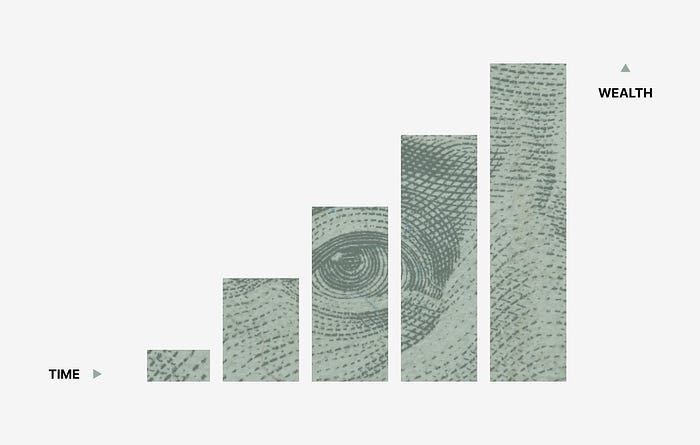
If you save an extra $10,000 when you’re 20 years old, and that money does nothing except just sit in your bank, you are losing out on the opportunity of having $200,000 when it comes time for you to retire, because you could invest that $10,000 instead.
Time is so important when it comes to investing because if you take that ten thousand dollars and you invest it when you’re 20, by the time you’re 65, that $10,000 can grow to over $200,000.
But if you start when you’re 30 and you take the same ten thousand dollars and you invest it, now that ten thousand dollars is only going to grow to a hundred thousand dollars.
You need time on your side; that way, you can grow your money and build your wealth. But that will never happen if you are saving all of your money.
The longer you invest your money, the more aggressively you invest, and the more money you invest, the more wealthy you will become, which is why you need to have savings. But you also need to invest your money.
Save enough money to protect your finances, so that we never have to worry about going into debt when an emergency happens.
Once you do that, you need to start investing aggressively; that way, you can really build your wealth.
4. You don’t value your time.
When you’re in college, a dollar is very valuable. And one thing that I thought was very interesting was how much people were willing to sacrifice to save a dollar, or, I guess, in this case, three dollars.
My friends Sunny and Max used to do something that always made me laugh.
Every year, a local pizza restaurant would run a special promotion where they gave away a free personal pizza to the first customers who showed up on a certain day.
The pizza normally costs around five dollars, so people felt like they were getting an amazing deal. But there was a catch.
To get that free pizza, you had to stand in a long line.
Sunny and Max would wake up early in the morning and wait nearly three hours just to claim their free meal.
Now, from a business perspective, that’s brilliant marketing.
The restaurant creates excitement, attracts attention, and gets people talking about their brand. But from a financial perspective, the situation looks very different.
If you’re spending three hours waiting to save five dollars, you’re essentially valuing your time at less than two dollars per hour.
Most people never think about it that way. They’re so focused on the money they’re saving that they forget to consider the value of the time they’re giving up.
Saving money is important, but your time is valuable too. Sometimes it’s better to spend a few extra dollars and use that time to learn a new skill, work on a project, or do something that can help you earn even more in the future.
Now I know you’re just a college kid, but still, I think your time is worth a little bit more than one dollar an hour.
But this doesn’t just happen when we’re in college. This happens all around us.
How many times have you seen your friends spend hours and hours and hours trying to find a coupon so they can save twenty dollars?
Or
How many times have you spent months trying to figure out how you can save an extra 500 on your car?
Saving your money is great. You should always try to negotiate and get the best price possible. But you also have to value your time.
If you can make 20 an hour at your job, is it really worth 30 minutes worth of your time to save five dollars? Sometimes we should pay a little bit more and spend our time earning more money.
That way, we can grow the pot and have our money, and then worry a little bit less about the price.
5. You let salespeople make financial decisions for you.
I used to be a real estate salesperson, and I was the best worst salesperson there was.
I don’t mean to brag, but I’m pretty good at real estate, and I’m pretty good at selling.
But I hated the idea of selling something to someone who couldn’t afford it.
I’m a financial person, and I’m always thinking of affordability, which is why the sales process for me was kind of really hard, even though I love selling.
Sales is a lot of fun. You get to learn about persuasion, and you get to learn about people, and you get to help people make buying decisions.
But salespeople are not in the business of looking out for your financial health.
A salesperson’s job is to make money, not for you, but for the company that they work for.
When a salesperson tells you that you’re getting a great deal, what that means is it’s a great deal for their commission check.
It’s the same with your bank. When you go to the bank, and you ask them how big a loan you can get or how big a house you can afford, their job is not to look out for your financial health. Their job is to make money, not for you, but for the bank.
You need to be a salesperson for your wallet. Your job is to keep more money in your pocket because your job is to make yourself the most money.
Now, this doesn’t mean that all salespeople are evil or that they’re bad. This is the business that they’re in, and so you need to understand how to protect your finances. That way, you can build your wealth.
If you found these 5 money habits helpful and learned something valuable from this story, make sure to follow this profile.
I regularly share practical financial lessons, money-saving strategies, investing insights, and wealth-building tips designed to help you make smarter financial decisions.
Follow along for more valuable financial knowledge and real-world money advice.
Thank You For Reading 🙂 & FOLLOW ON SUBSTACK